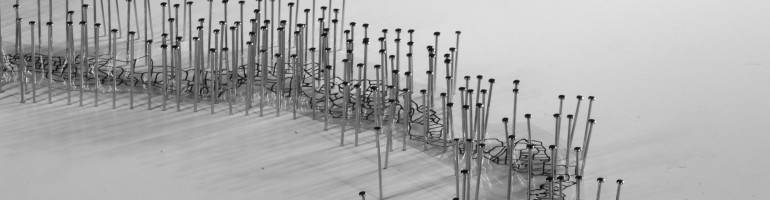
RMIT University Architecture & Landscape Architecture Student Exhibition
23rd June until 2nd July, 2010
Opening Night:
Location:
Campus Building 8, 360 Swanston St (levels 11 & 12)Wednesday 23rd June
6pm
RMIT University Architecture & Landscape Architecture Student Exhibition
23rd June until 2nd July, 2010
Opening Night:
Location:
Campus Building 8, 360 Swanston St (levels 11 & 12)Wednesday 23rd June
6pm
Filed under Uncategorized
The RMIT Landscape Architecture Program Public Lecture Series 2010
Against architecture: detournement as a psychogeographical tactic in underground culture
Speaker
:
BRUCE RUSSELL
Guy Debord is famous for espousing both the study of urban psychogeography
and the practice of detournement as revolutionary tactics in culture. In this lecture
Bruce Russell adduces theoretical and practical evidence from sources as diverse
as the Situationist International, Walter Benjamin, Andy Warhol, Andrei Tarkovsky
and Throbbing Gristle to argue that re-purposing the architectural wastelands of
industrial capitalism is not merely a necessary evil of avant garde cultural practice,
but in fact a secret weapon in the arsenal of cultural insurrection. One interpretation
of Debord’s ideas might see architecture itself detourned in a collage of
ruins – rather than utopian new drifting cities being built in the sky.
When:
Wednesday 2nd June, 2010
Time:
6.30pm
Where:
RMIT University
Building 8, Level 11, Room 68 ( lecture theatre)
All Welcome
Drinks at 6.00pm
Bruce Russell is a practitioner in sound, who since 1987 has been a member of The Dead C. This genre-dissolving New Zealand trio
mixes rock, electro-acoustics, noise and improvisation in equal measures. He has also been active as a solo artist, and directed two of
New Zealand’s vanguard record labels, Xpressway and Corpus Hermeticum.
He is currently studying at RMIT towards a doctorate in sound. This seeks to establish a theory of the social utility of improvised sound
work, building on Guy Debord’s critique of the commodity-spectacle, Walter Benjamin’s refl ections on time and commodity fetishism,
and Karl Marx’s theory of value.
He is also programme leader in Information Design at the Christchurch Polytechnic Institute of Technology.
Filed under Uncategorized
RMIT Landscape Architecture_Lecture Series_2009
Monday May 11 @ 6.30 pm
BMW Edge Theatre @ Federation Square
Entry fee: $5 (students), $10 (professionals)
ALL WELCOME!
Postscript 2009 event qualifies for AILA Continuing Professional Development credit
Where Does Design Begin?
Anuradha Mathur & Dilip da Cunha
The practice of landscape architecture is divided in its concern between the first and last acts of settlement, between the necessity of configuring the infrastructure of habitation and the luxury of articulating its ‘third’ nature. There is an urge in the profession to bridge this divide, to argue the necessity of the latter and the possibilities of the former. While this effort is ongoing, it is worth calling attention to a common ground that is already shared by these ‘ends’ of practice, viz., the primordial act of singling things out from flux, whether these things are objects, processes, schemes, or phenomena. This shared act of ‘visualizing’ is often taken for granted by designers but also by the larger milieu of design practice, particularly the disciplines of history, geography and ecology that are becoming increasingly central to arguing design interventions. In this talk we present our engagement with the act of visualizing, the challenges that it presents with regard to reading the past, present, and future of ‘site’, the possibilities that it opens for design, and the ‘new’ practices that it demands. Anuradha Mathur and Dilip da Cunha have focused their artistic and design expertise for the past decade on cultural and ecological issues of contentious landscapes. Their investigations have taken them to diverse terrains including the Lower Mississippi, New York, Sundarbans, Rio Grande, and Bangalore. They believe that landscapes are shifting, living, material phenomena that demand an attitude of negotiation rather than control. Their mission is to create through innovative modes of visual representation the ground for this attitude in design.
Anuradha is an architect and landscape architect. She is Associate Professor, School of Design, University of Pennsylvania. Dilip is an architect and planner. He is visiting faculty at Parsons School of Design, New York, and University of Pennsylvania, Philadelphia. While Mathur and da Cunha’s drawings and projects have been part of a number of exhibitions in the US and India, they have used the format of public exhibitions as a means of initiating and encouraging discourse on design and planning in contentious landscapes. They are authors of Mississippi Floods: Designing a Shifting Landscape (Yale University Press, 2001) and Deccan Traverses:The Making of Bangalore’s Terrain (Rupa & Co., 2006).
Sustaining Beauty
Elizabeth Meyer
Sustainable landscape design is generally understood in relation to three principles – ecological health, social justice and economic prosperity. Rarely do aesthetics factor into sustainability discourse outside of negative asides conflating the visible with the aesthetic and rendering both superfluous. The paper examines the role of beauty and aesthetics in a sustainability agenda. It argues that for culture to be sustainable it will take more than ecologically regenerative designs. What is needed are designed landscapes that provoke those who experience them to become more aware of how their actions affect the environment, and to care enough to make changes. This requires considering the role of aesthetic environmental experiences, such as beauty, in recentering human consciousness from an egocentric to a more bio-centric perspective. This argument takes the form of a manifest, and is inspired by landscape architects whose work is not usually understood as contributing to mainstream sustainable design.
Elizabeth Meyer is an associate professor and former Landscape Architecture Department Chair at the University of Virginia. Previously, Meyer taught at Harvard and Cornell. She is nationally recognized as an outstanding scholar and teacher, with honors and awards from the Council of Educators in Landscape Architecture, the American Society of Landscape Architects, and the University of Virginia. Ms. Meyer is a Fellow of the American Society of Landscape Architects, and a registered landscape architect who worked for EDAW and Hanna/Olin in the 1980s. Since then, she has consulted with several landscape architecture firms including Michael Vergason, Alexandria, Virginia, and Van Valkenburgh Associates, Cambridge.
Filed under Uncategorized
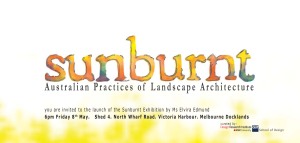
Sunburnt: Australian Practices of Landscape Architecture
Exhibition
Date: 6.00 PM, Friday 8th May 2009
Place: Shed 4, North Wharf Road, Victoria Harbour
Melbourne Docklands
The RMIT Design Research Institute, Urban Liveability Program and the QUT School of Design invite you to the launch of Sun-burnt: Australian Practices of Landscape Architecture. This exhibition examines spatial and material qualities that define the Australian landscape through the lens of landscape architecture. The presence or absence of water in its various forms determines much about the cultural and physical differences in Australia. Iconic aspects of the landscape will be explored through the richness of extremities, which are marked, but gradual in relation to the scale of the country. The discrepancy between ideas about and the reality of Australia are played out through the selected landscape design projects.
Filed under Uncategorized
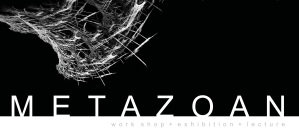
Postscript 2009 is proud to present the ‘METAZOAN’ Masterclass run by guest lecturers Anuradha Mathur + Dilip da Cunha
Metazoan is an exploration of the adaptability and mutability of contemporary landscape. With increasing environmental, social, economic and ecological trends changing at an unprecedented rate, how does the existing landscape adapt to further change, and how can landscape architecture assist this evolution in response to change?
A design workshop engaging with the unique technique of Anuradha Mathur and Dilip da Cunha. The Masterclass will be held over 2 consecutive days at RMIT University.
+ sunday 10th may 9:30 – 6:00pm
+ monday 11th may 9:30 – 6:00pm (closing lecture @ 6:30pm )
participation fee per person: $95
(light refreshments, nibbles and lunch included)
Filed under Uncategorized
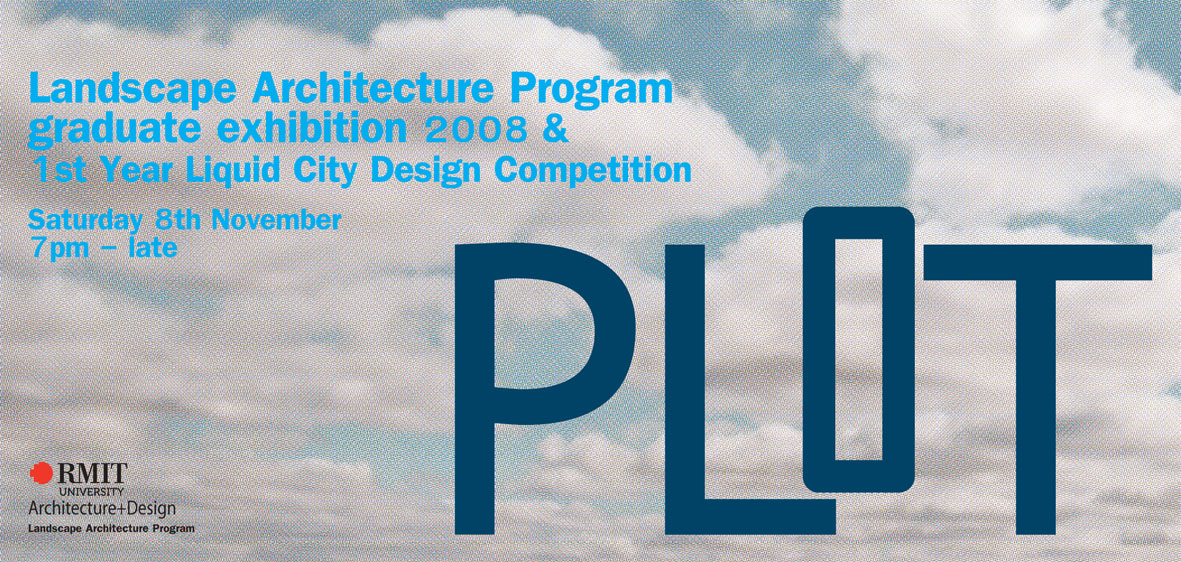
Examinations
Monday 3/11/08 9am-6pm
Wednesday 5/11/08 9am-6pm
Thursday 6/11/08 9am-6pm
Friday 7/11/08 9am-6pm
Exhibition
Saturday 8/11/08 7pm-late
Venue
rear of 19-37 Abeckett St
Melbourne 3000
Filed under Events
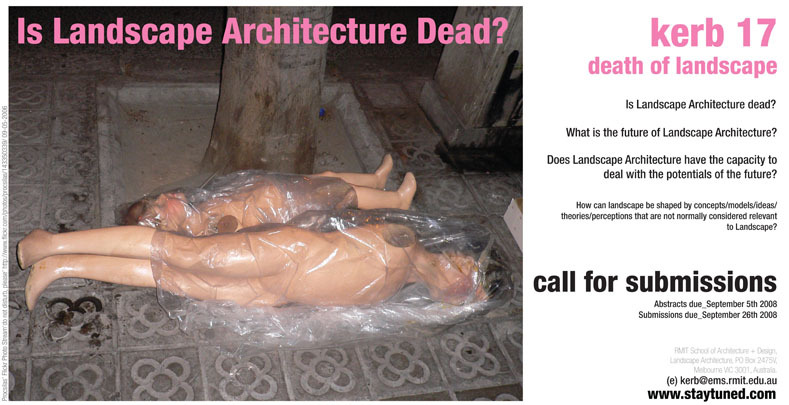
Kerb Call for Submissions
Filed under Uncategorized
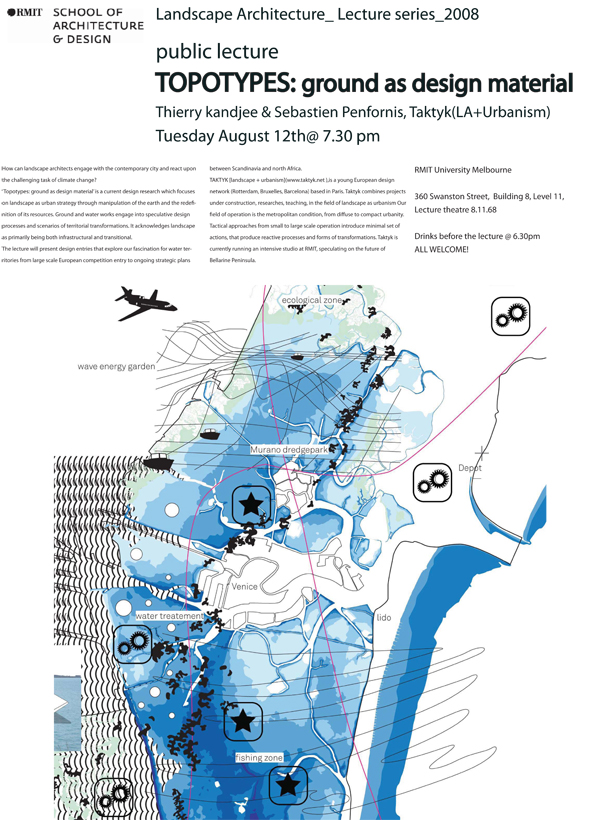
Filed under Uncategorized
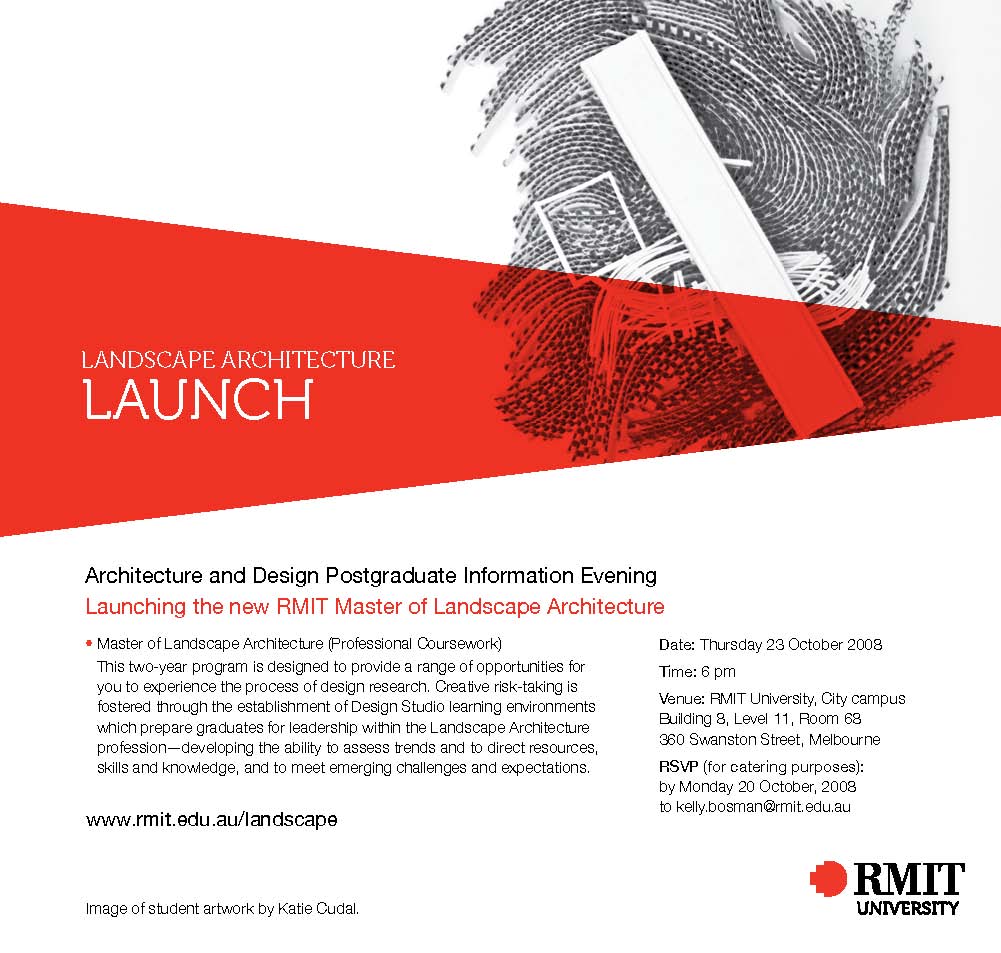
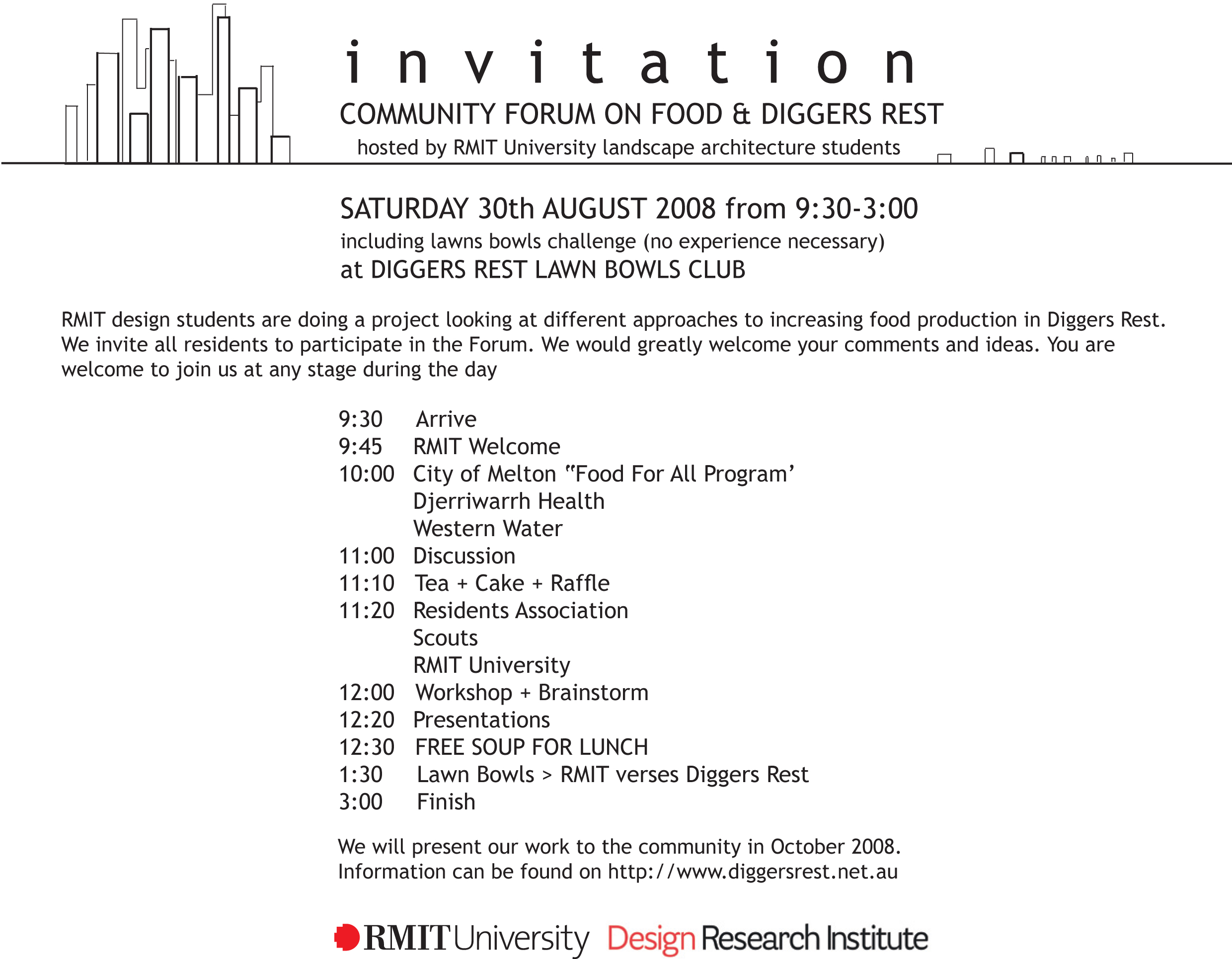
 postscript